Offside Dream
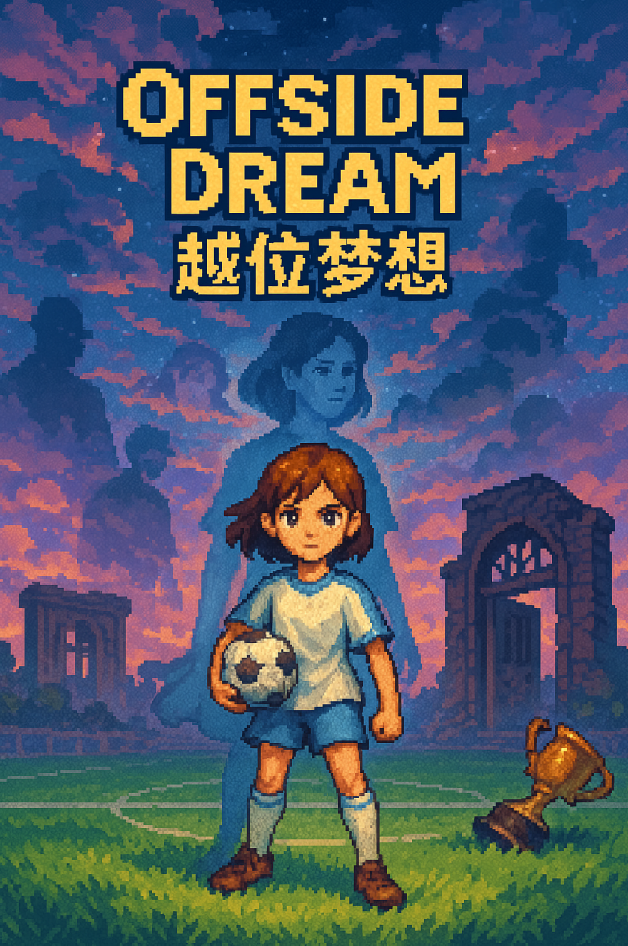
- An AI-driven narrative game that analyzes player input to shape relational decision-making in the context of women’s football and structural inequality.
Trailer
1. Project Overview
In-Game Scenes
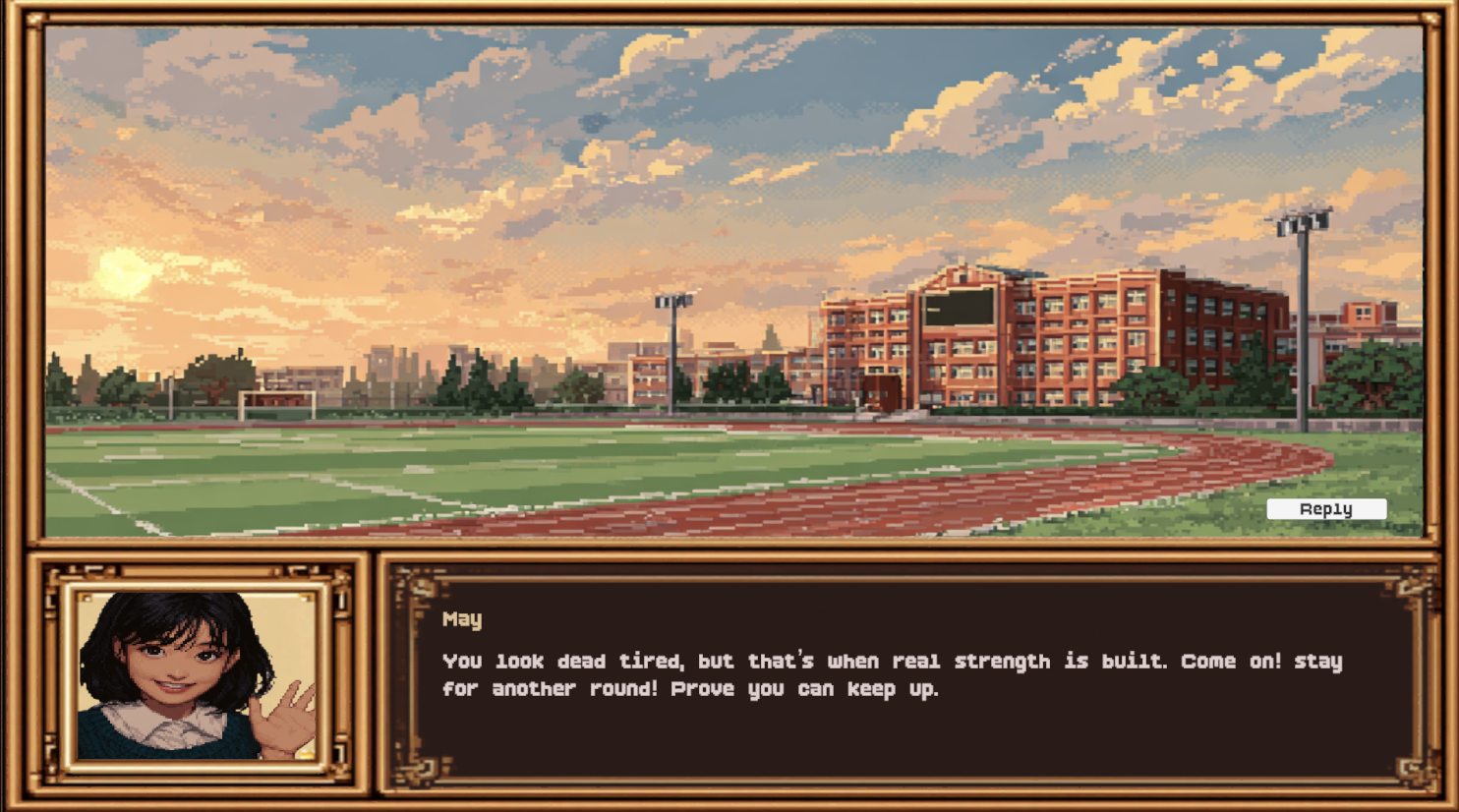
About the Story
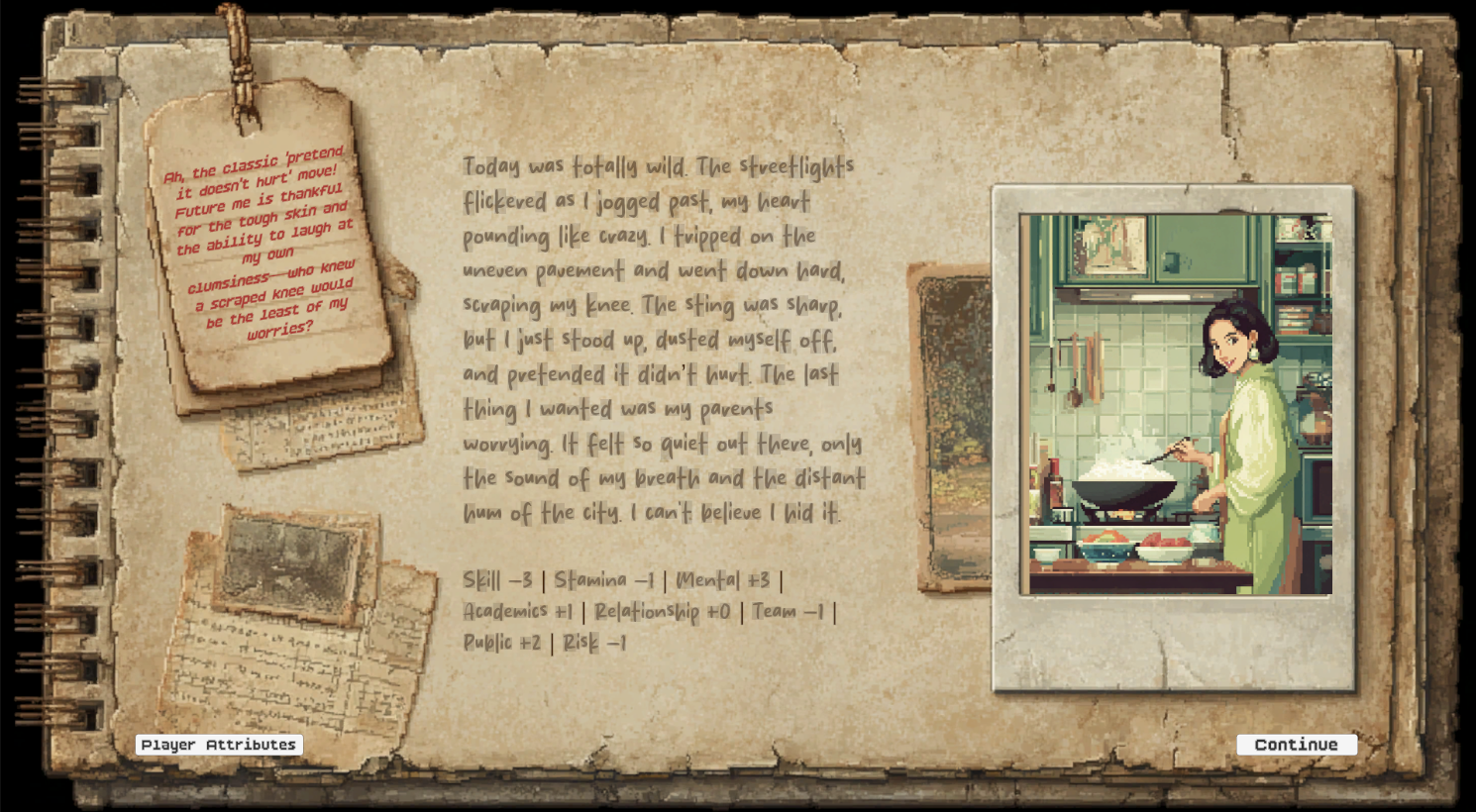
You begin as an exhausted 32-year-old corporate worker. After a sudden accident, you wake up as your teenage self in a 2000s Chinese high school.
Weekly choices shape your football ability, mental health, academics, relationships, and reputation.
Multiple endings reflect your path: professional athlete, academic route, balanced success, or dream collapse.
About the Techs
Unity (C#): Implements the core gameplay loop, weekly actions, event flow, and UI logic.
LLM-based input analysis: AI evaluates the player’s written responses, detecting tone, intent, and emotional cues, to adjust relationship values and other stats.
AI event generator: Produces three context-dependent events each round that influence skills, stress, morale, and narrative direction.
8-stat gameplay framework: A custom system that drives branching paths, conflicts, and outcomes.
2. Game System Design
How Attributes Work
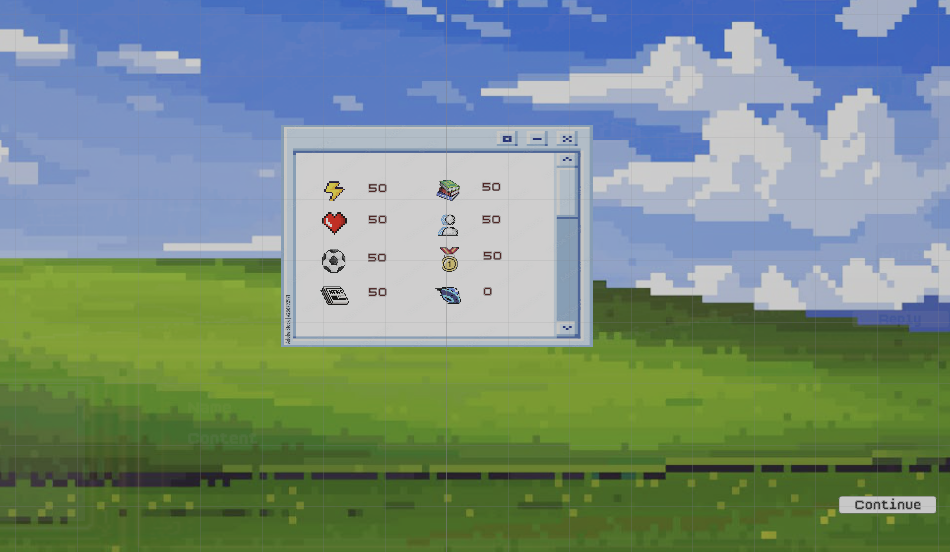
The game tracks 8 core attributes that shape every interaction and narrative branch: Stamina, Mental Health, Skill, Academics, Relationship, Team Morale, Public Opinion, and Return Risk.
Core Loop
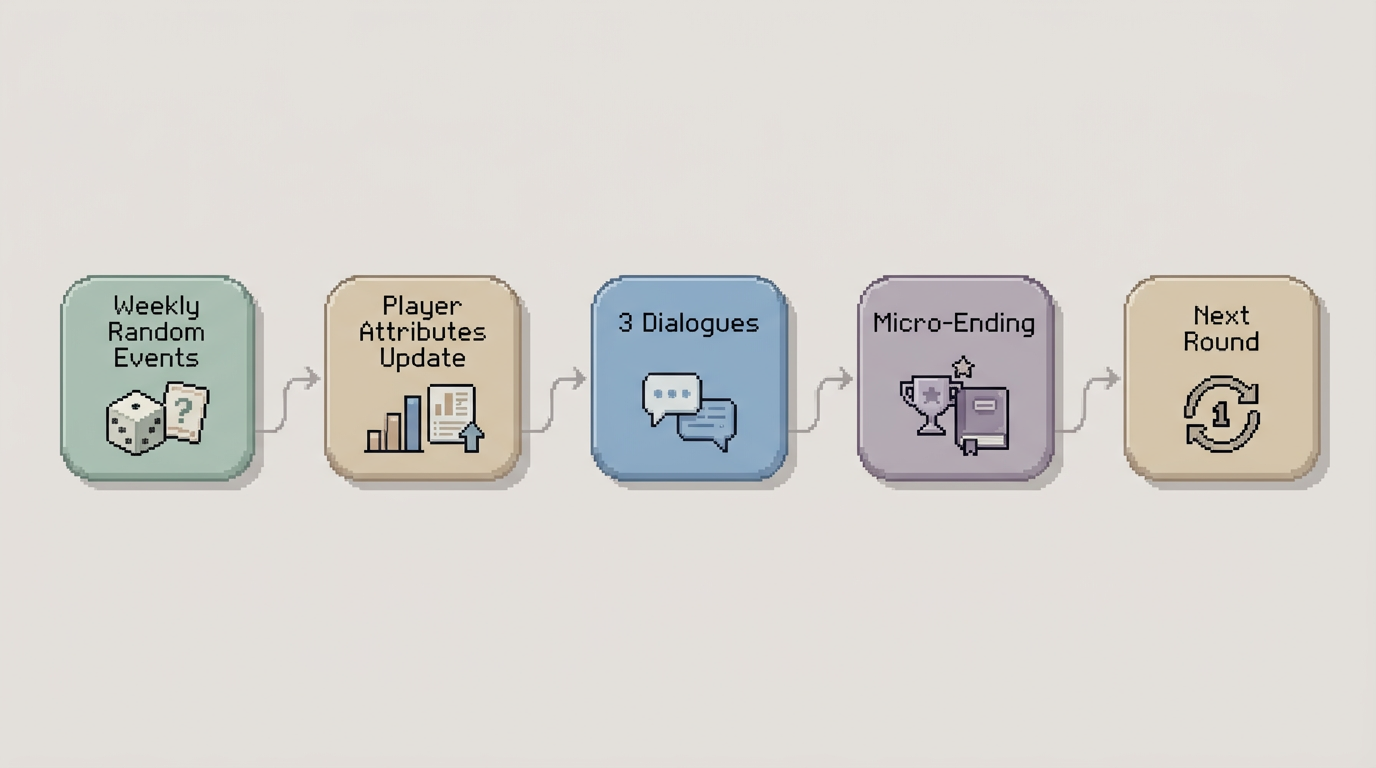
Each round follows the same rhythm:
Weekly Random Events → Player Attributes Update → 3 Dialogues → Micro-Ending → Next Round
Actions include:
Study, Training, Rest, Bonding, Media Handling, Matches……
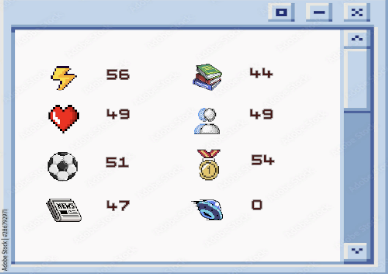
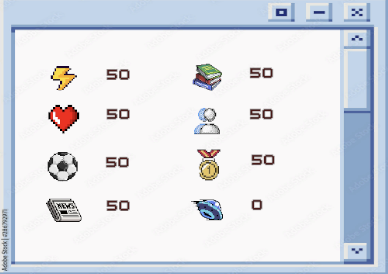
Every weekly AI event, and dialogue choice updates one or more attributes. When the Return risk reaches 50, the game automatically ends: you fail your football dream and return back to reality.
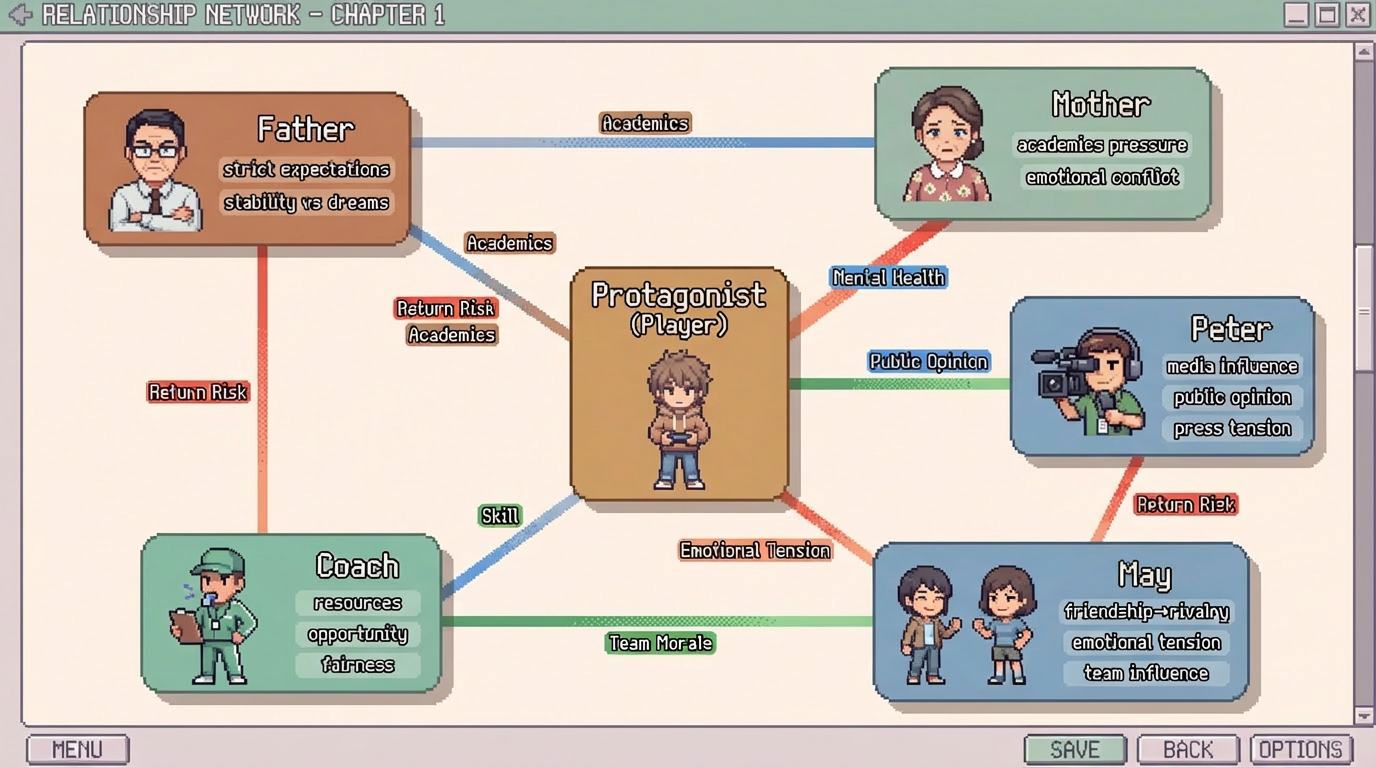
3. Story + Characters
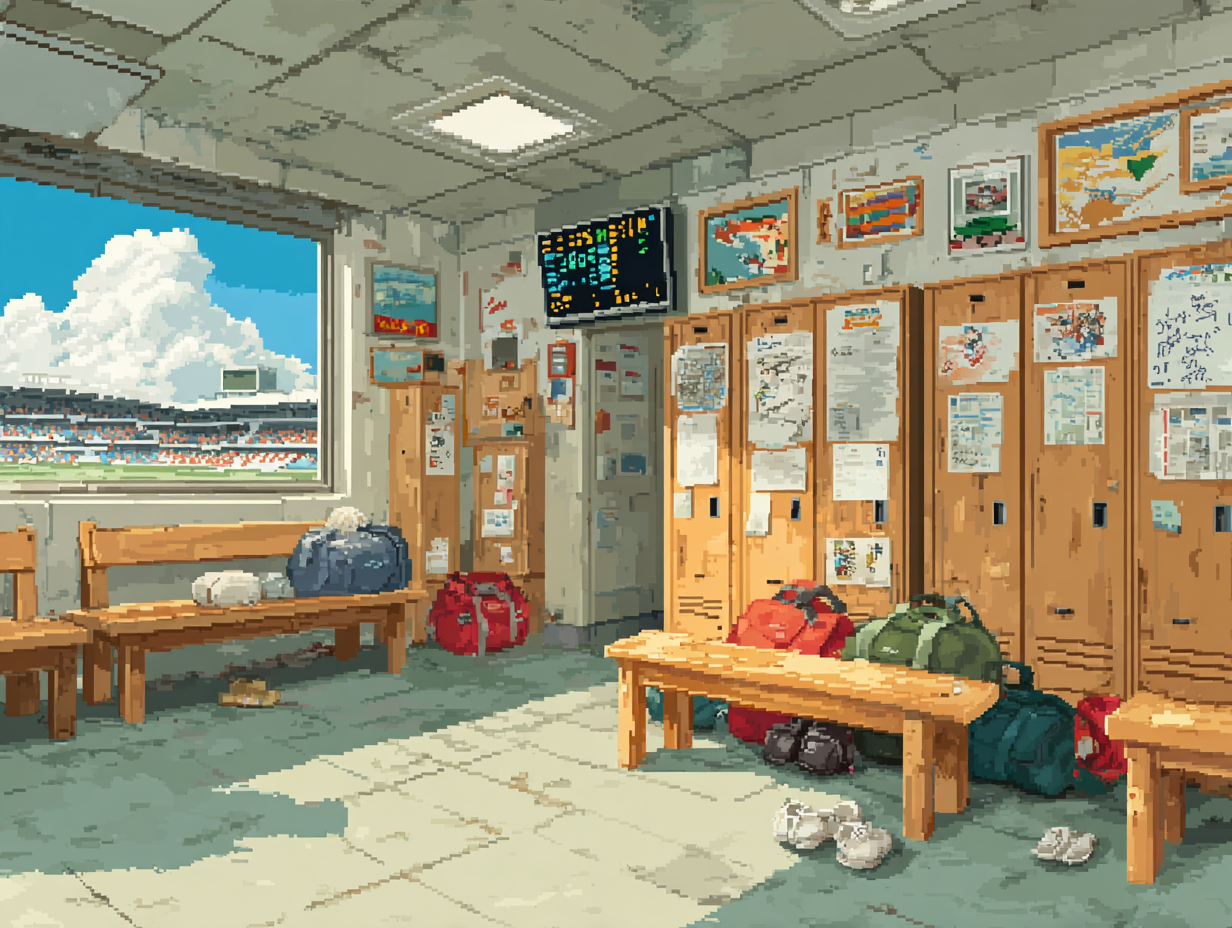
The story takes place in a fictional 2000s third-tier Chinese city: grey concrete, faded school buildings, small shops, and a football field barely holding itself together. It’s nostalgic, warm… and painfully real.
4. AI-Narrative Engine
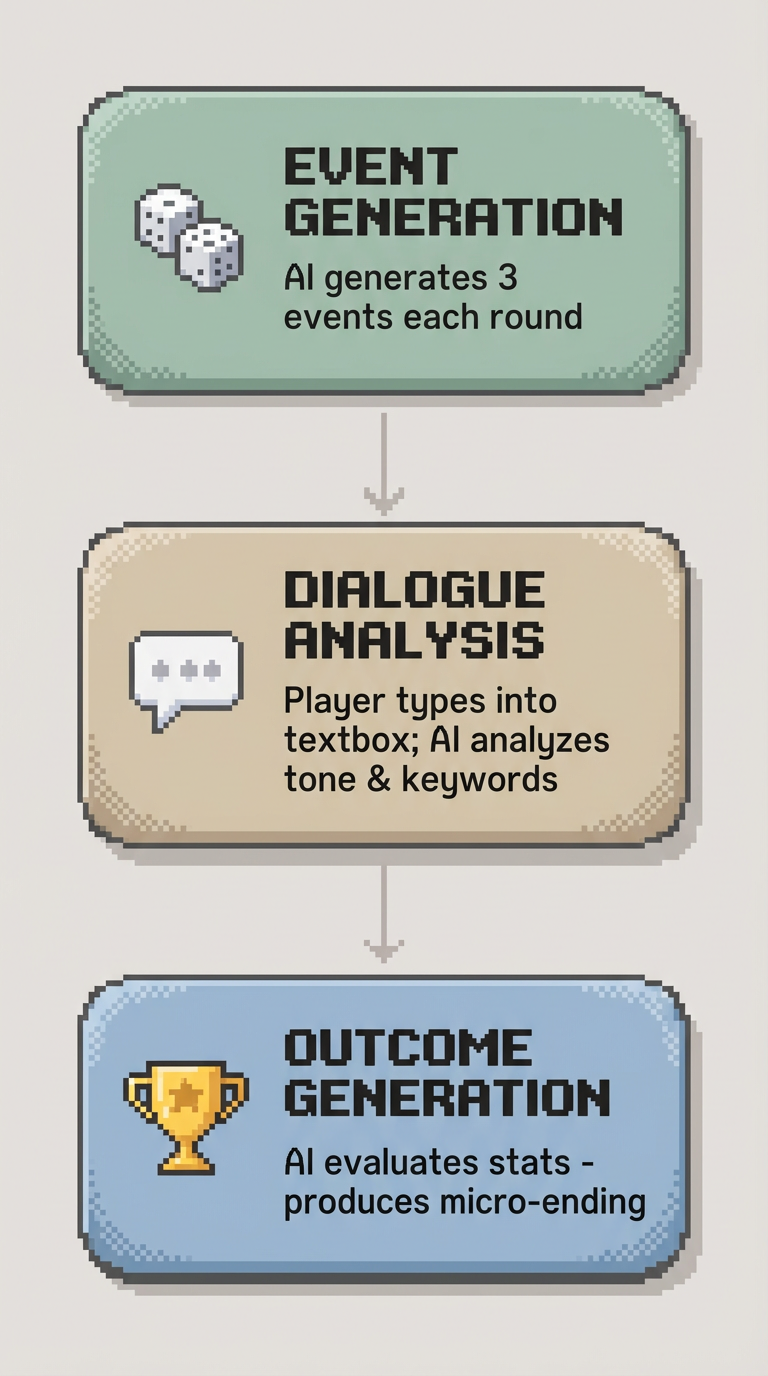
4.1 Event Generation
Each round includes three AI-generated “random events.”These combine:
your current stats
rule-based event pools
real-world milestones (e.g., 2008 Olympics)
4.2 Dialogue Generation
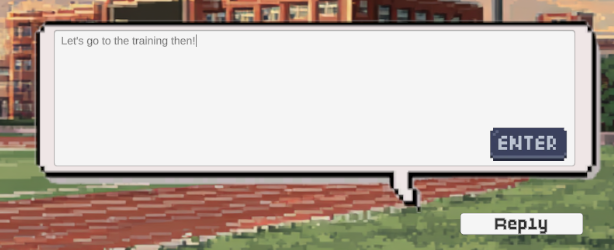
Players type directly into a textbox.The AI interprets tone and keywords, producing NPC responses that update relationship values. NPCs remember what you say, and change because of it.
4.3 Outcome Generation
At the end of each round, AI evaluates:stats + relationships + accumulated past events → produces a micro-ending → pushes the story toward different long-term outcomes.
5. Pixel Art & Style




6. Playtesting
Participants
- 6 players (4 female, 2 male; mixed familiarity with women’s football)
Methods
- Think-aloud playtesting
- Post-play semi-structured interviews
Key Findings
- Players initially misinterpreted the AI character as a tool rather than a teammate
- Emotional engagement peaked during moments of unfair treatment and silence
Future Design Iterations
- Deepen the AI’s understanding of player intent so responses feel more emotionally grounded and context-aware.
- Set clear boundaries for AI behavior to keep the story coherent and under narrative control.
- Enrich the experience with stronger visuals, subtle animations, and expressive sound design.
- Add small, story-driven mini-games add more fun.
- Create a clear, inviting intro page that explains what the game is, how to play, and why it matters.