Mind Journey
– A Multimodal LLM–Powered Reflective Journaling Tool
1.Overview
About the APP
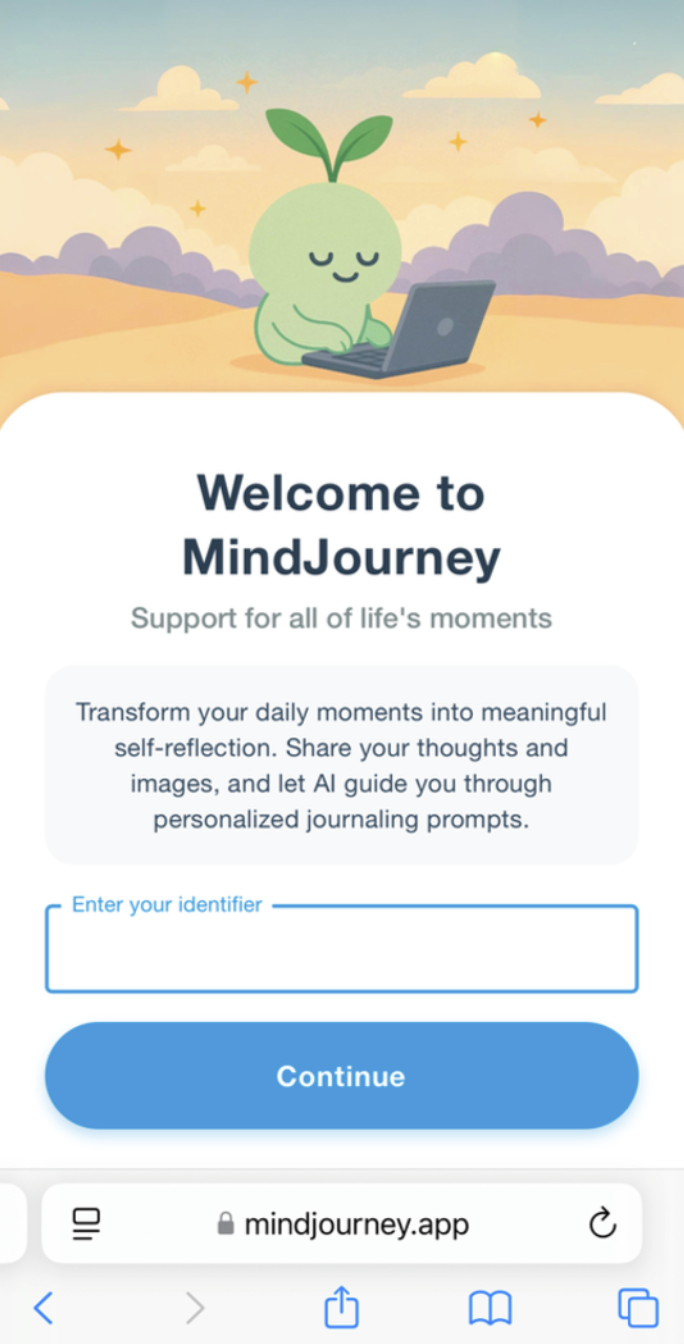
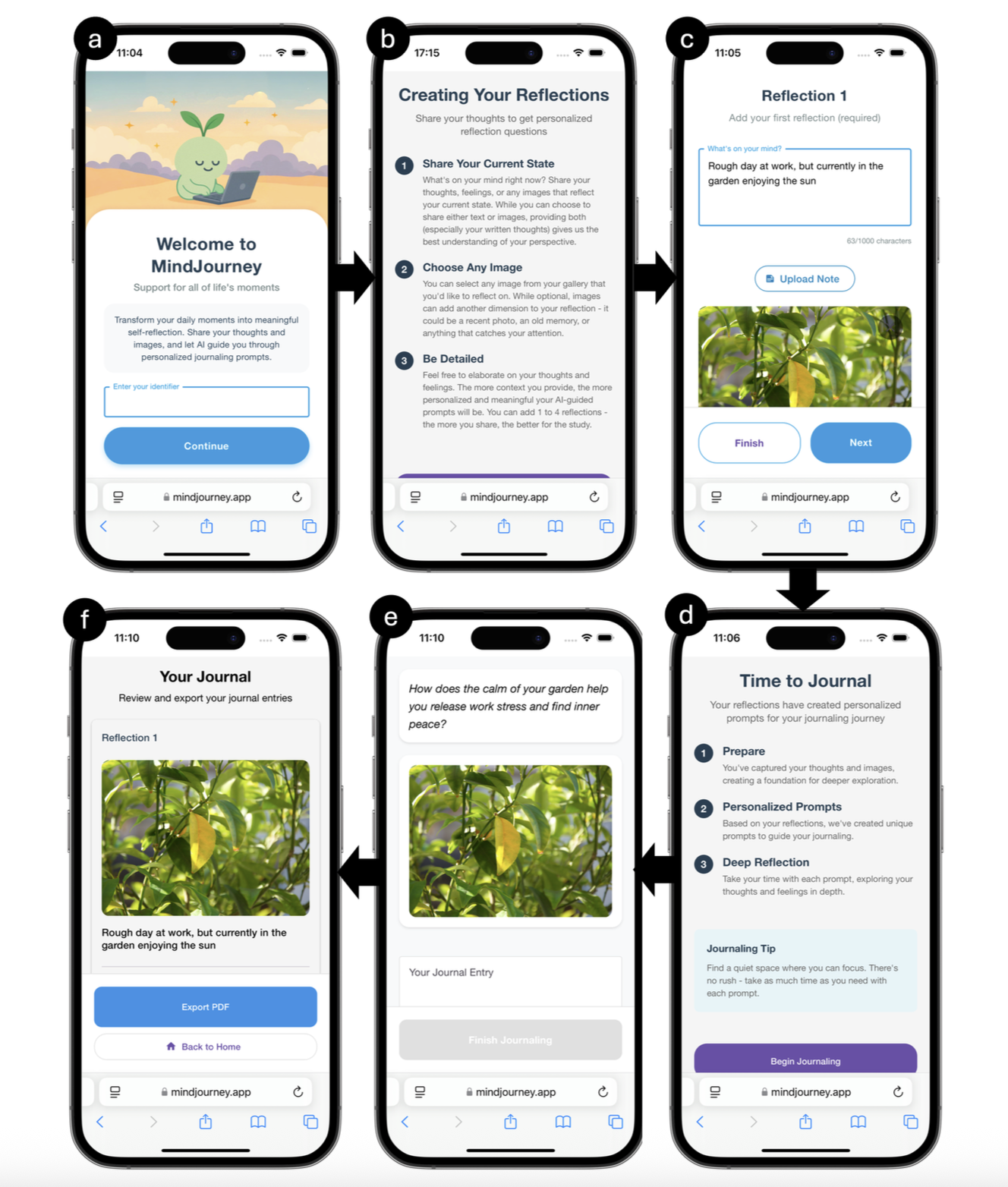
MindJourney uses a multimodal LLM to generate personalized reflective prompts from users’ photos and written notes. After a simple input, the system analyzes image and text in parallel, detects emotional cues, and selects an appropriate reflective tone, such as self-compassion, clarity, or curiosity, to produce a tailored prompt.
Technically, the app is built with React Native + Expo, a PostgreSQL backend on Heroku/Vercel, and a multimodal GPT model for processing. A dynamic weighting mechanism adjusts how strongly the system relies on image or text depending on the richness of the user’s input.
About the Project
We evaluated the system through a four-day within-subjects study (N = 42), comparing MindJourney with a traditional guided journaling tool. Participants completed daily journaling sessions, post-session questionnaires, and follow-up interviews.
Full user flow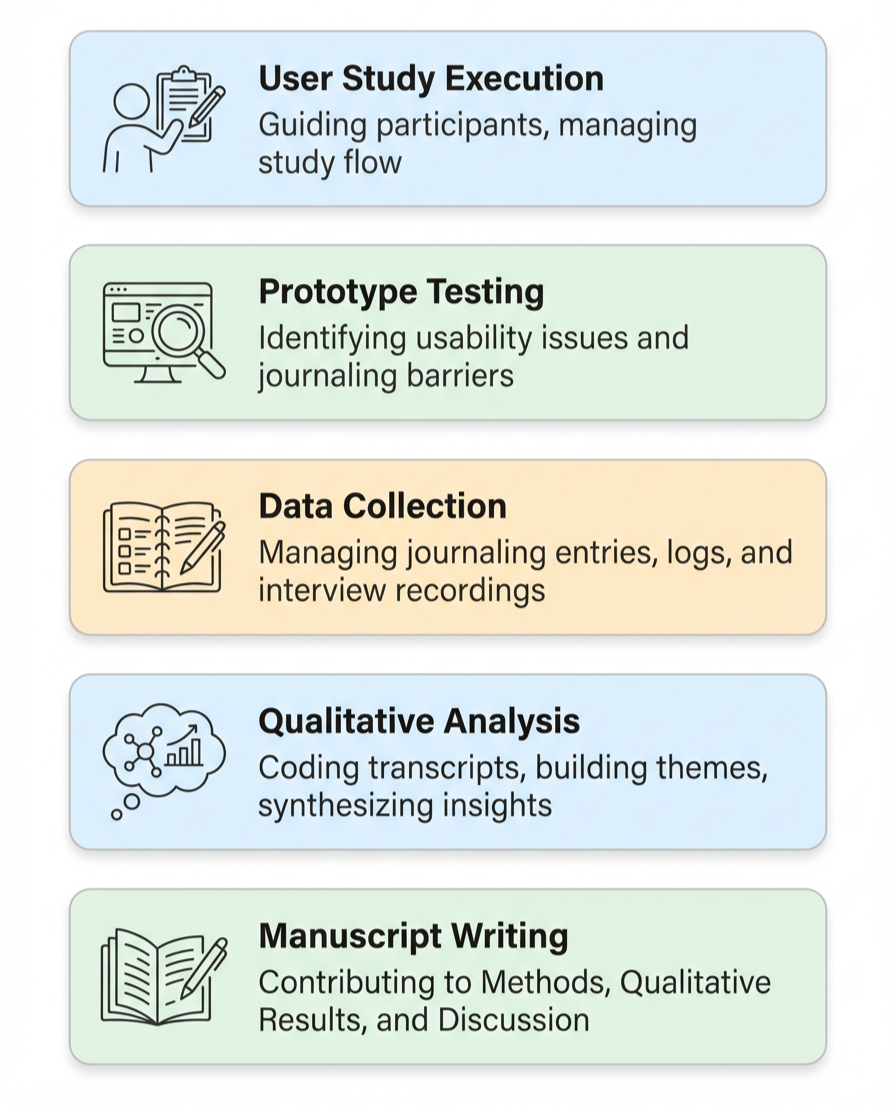
2. My Role & Responsibilities
3. Research Questions
RQ1: How can photos, notes, and multimodal LLMs be combined to support reflective journaling?
RQ2: Do personalized prompts enhance young adults’ motivation, engagement, and introspection compared to traditional journaling?
RQ3: How do users experience an AI-supported reflective journaling tool?
4. Research Process

4.1 Study Design
We adopted a four-day within-subjects design in which each participant used both systems (baseline → MindJourney or reversed order). The study procedure diagram clearly shows the sequence:
Day 0: Intake questionnaire and onboarding
Day 1–2: Traditional guided journaling
Day 3–4: MindJourney sessions
Post-study: Surveys and interviews
4.2 Prototype Testing
Before running the study, I conducted hands-on testing with early prototypes to examine:
clarity of the journaling flow
coherence of AI-generated prompts
user experience when uploading images or notes
pacing and cognitive load during sessions
4.3 Data Collection
Across all participants, I collected:
504 journaling entries (3 prompts × 4 days × 42 participants)
IMI and UES questionnaires after each system
System-logged metadata: entry length, typing duration
Semi-structured interview transcripts
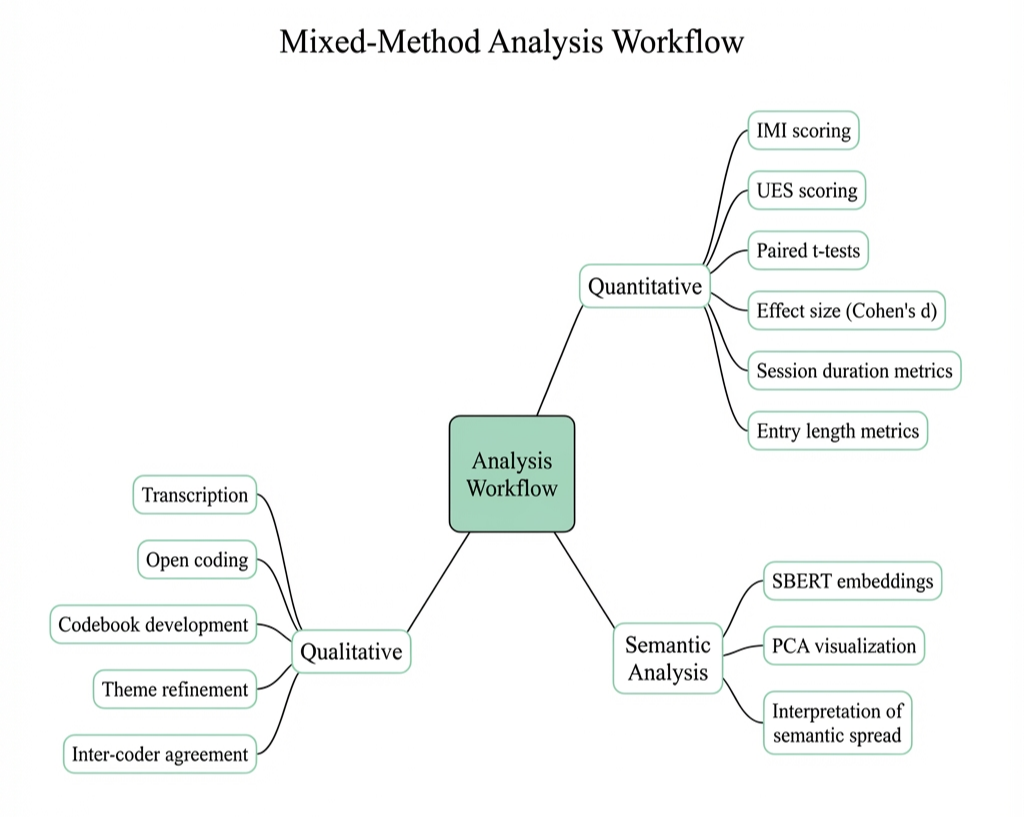
4.4 Analysis Workflow
Quantitative analysis included paired t-tests, effect sizes, and visual result interpretation using the manuscript’s figures.
Qualitative analysis followed a thematic approach: initial coding → codebook development → iterative refinement → four final themes aligned with participants’ emotional and reflective experiences.
5. Key Findings
5. Key Findings
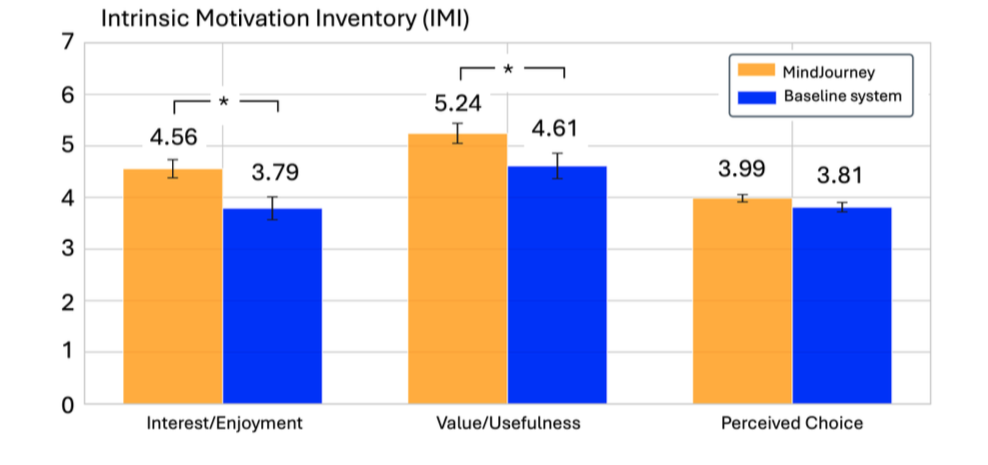
5.1 MindJourney Increased Motivation and Engagement
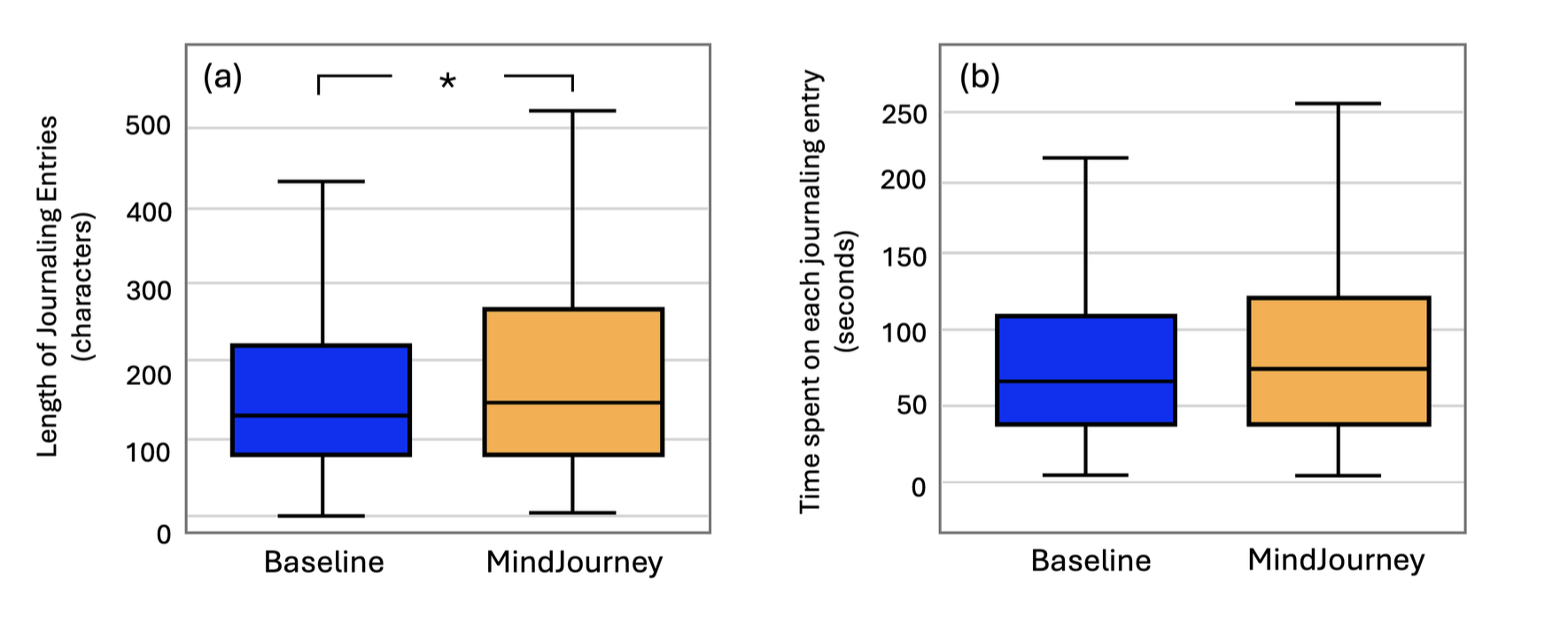
5.2 Richer Expression Without Increased cognitive load
5.3 Deepened Emotional Reflection (Qualitative Themes)
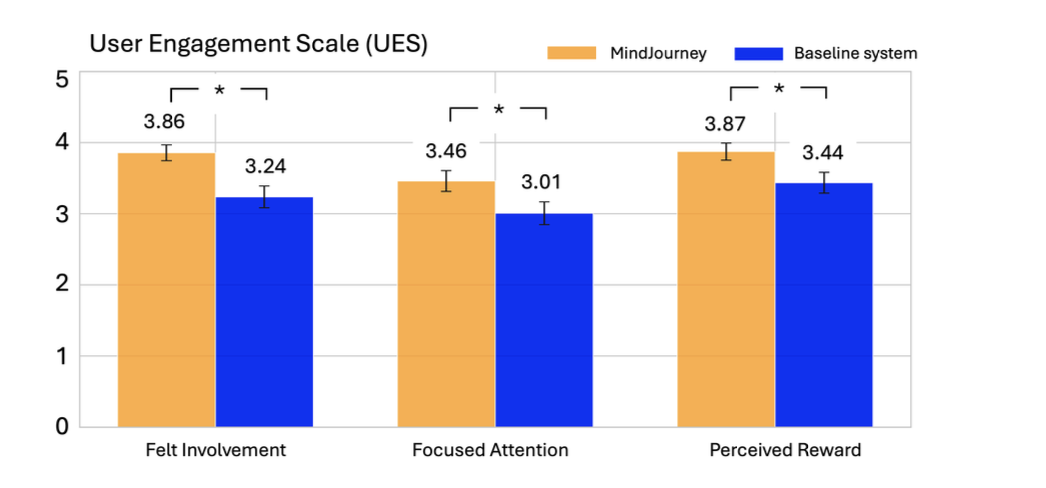
Quantitative results showed significantly higher scores for:
Interest and enjoyment
Value and usefulness
Felt involvement and perceived reward
These effects are clearly visualized in Fig.(IMI) and Fig.(UES), which highlight MindJourney’s ability to make journaling more intrinsically motivating.
MindJourney led to longer journaling entries, indicating richer reflection, without increasing session duration.
Users wrote more, but did not feel burdened—an important insight for wellbeing tools.
Four major themes emerged (supported by interview data):
Personalization fostered emotional connection
Photos and notes inspired new perspectives
Concrete, tailored prompts made writing easier to begin
Users desired more conversational, iterative interactions with AI
6.FUTURE
Transition the prototype into a polished, commercial-ready mobile or web product.
Strengthen privacy controls so users can safely upload personal photos.
Improve prompt personalization based on users’ reflection patterns over time.
Add habit-support features (e.g., reminders, weekly summaries) to boost long-term engagement.
Pilot partnerships with student wellness programs to test real-world adoption.
This work, MindJourney: Personalized Reflective Journaling for Young Adults Through Photos, Notes, and Multimodal LLMs, is currently under review for the ACM IMWUT Conference.