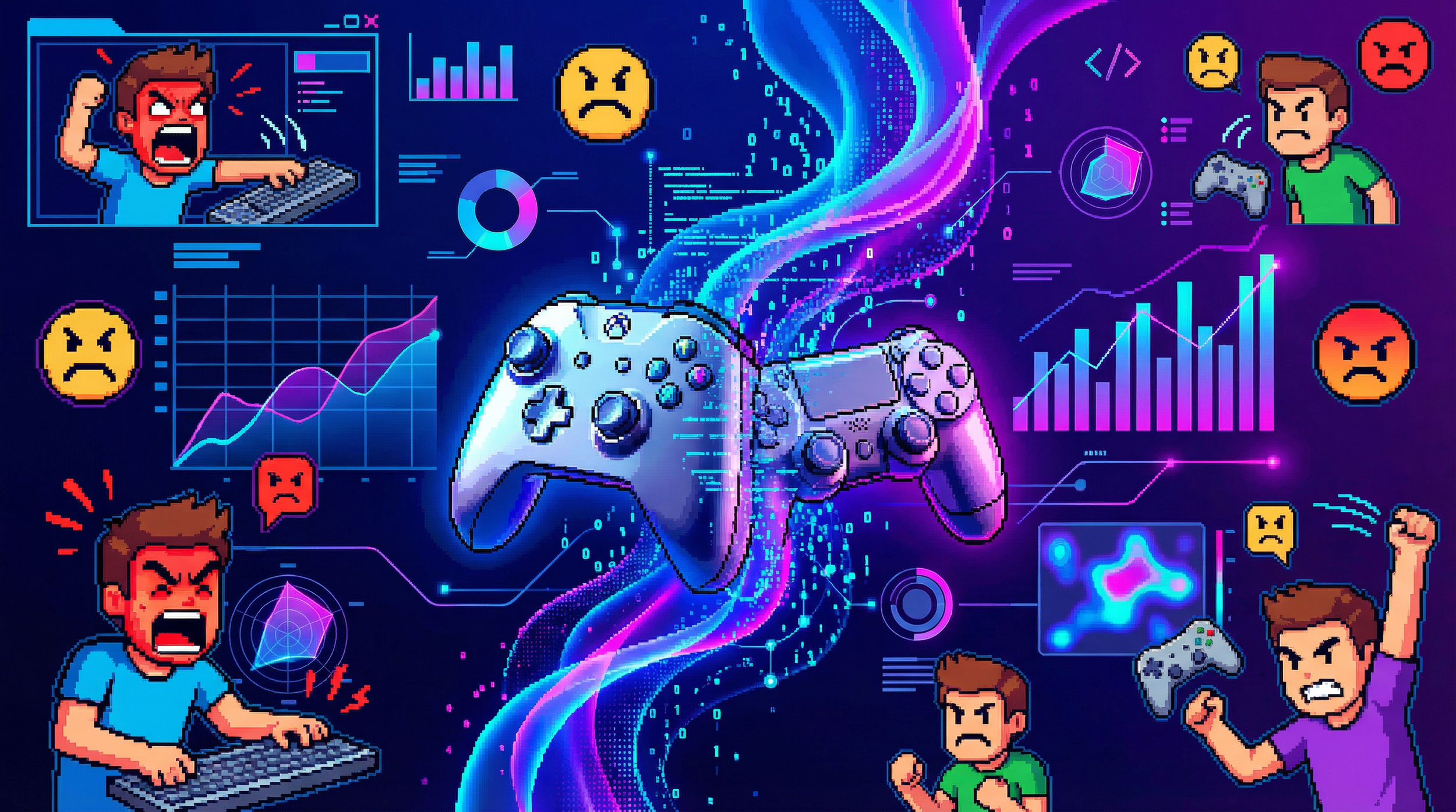
Game & Anger
- A quantitative study (N=126) uncovering why game difficulty alone cannot explain players’ anger, revealing deeper factors behind emotional responses.

Project Overview
Conducted a survey study with 126 participants aged 18–35 to examine how game difficulty relates to anger management, covering full research workflow from design to analysis.
Built and validated two measurement scales (difficulty α=.74, anger α=.73) and confirmed construct validity through factor analysis explaining 66% variance.
Ran a multiple regression model and discovered no significant predictors, revealing that emotional responses in games require multi-factor UX consideration beyond difficulty alone.

2.Future Application
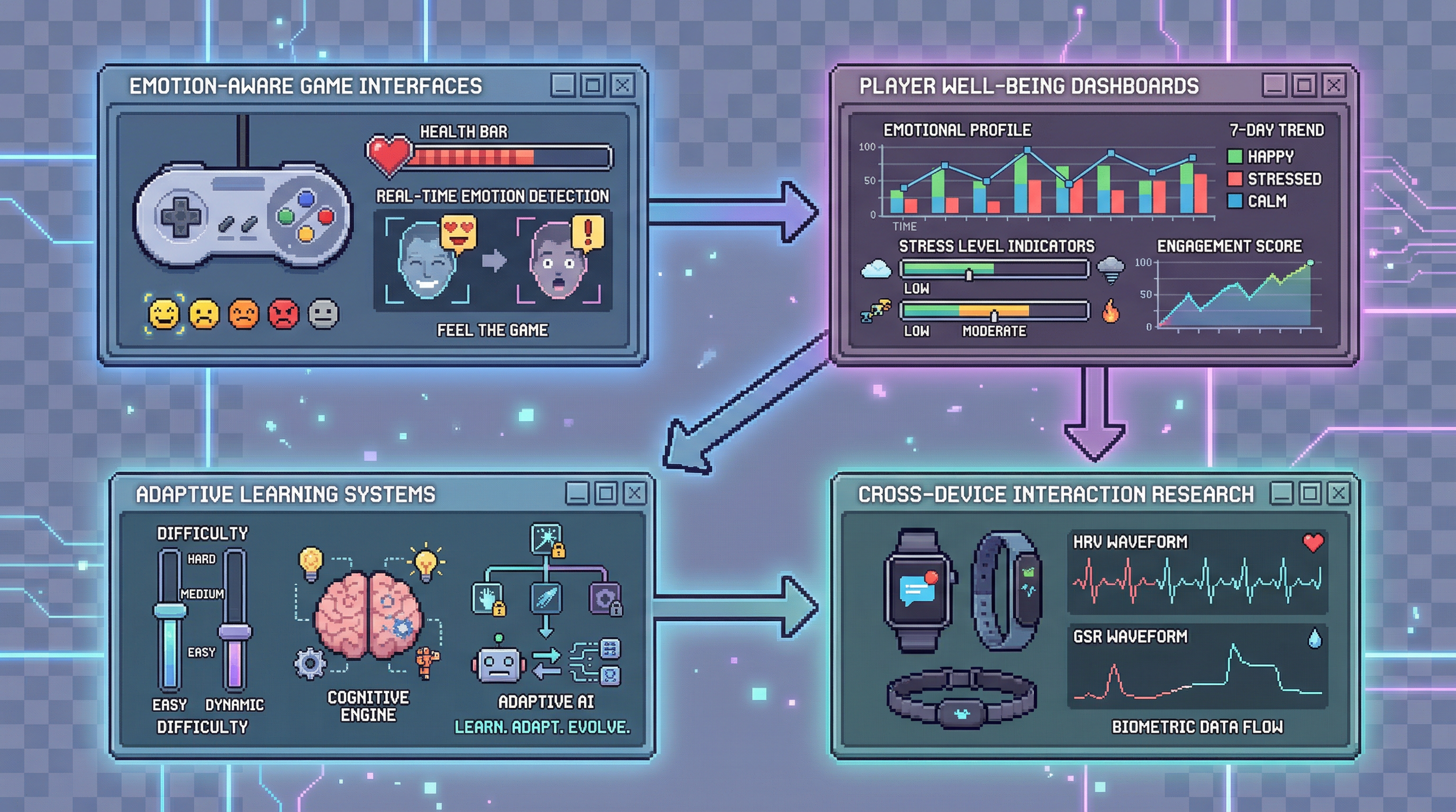
Emotion-Aware Game Interfaces
Real-time UI that detects player frustration levels (e.g., adaptive difficulty, instant emotional feedback).
Adaptive Learning Systems
Apply the “decoupling difficulty from emotion” findings to educational/training games → Dynamically adjust challenges based on player cognitive load.
Player Well-being Dashboards
Provide players with personalized emotional profiles to track stress and emotional fluctuations during gameplay.
Cross-Device Interaction Research
Combine wearables (HRV, GSR) to explore more precise multi-modal anger prediction models.